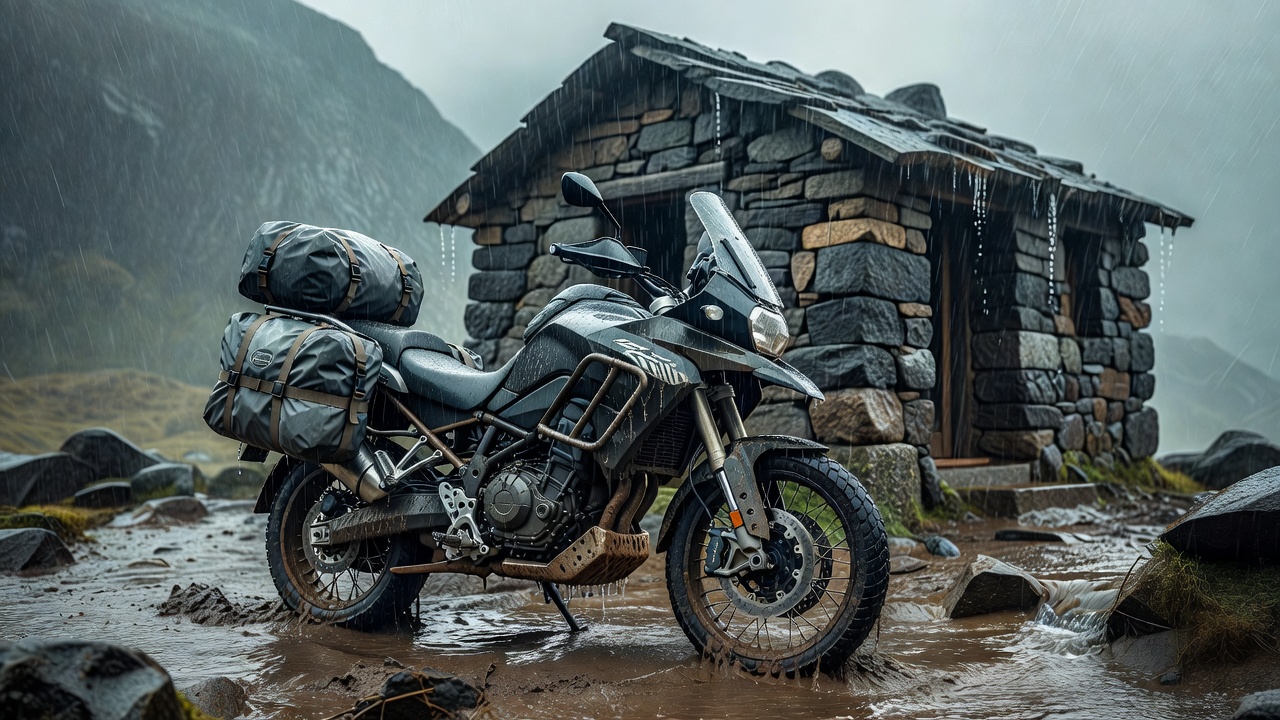
Preparation is not about carrying everything. It is about knowing what can change and having one sensible answer ready for each.
The ride briefing
One page, written before you ride
The ride briefing is the core of every trip we plan. It fits on one page, lives in your tank bag and on your phone, and is shared with someone who is not on the ride. Fill it in the evening before, then review it at breakfast against the latest forecast and road status.
Route and distance. Start, end, total kilometres and a realistic ride time. On mixed mountain roads, a 50 km/h average is a sensible planning estimate.
Fuel points. Every confirmed station, the longest gap and your calculated margin from the fuel worksheet.
Weather window. Forecast highs and lows at the highest point, wind, and the time storms are expected.
Bail-outs. Lower roads, towns with lodging and the extra distance each adds.
Turnaround time. The clock time after which you stop pushing forward.
Contacts. Local emergency number, your check-in contact, insurance and recovery numbers.
Verify locallyRoad status, pass openings and station hours come from local sources on the day. A briefing based on last week's information is a draft.
Weather preparation
Read the forecast like a route
Valley forecasts mislead on mountain days. Use mountain or point forecasts for the highest section, check wind at altitude, and look at radar on the morning of the ride. Riders who handle weather well layer their clothing and their plan: a warm layer within reach, a waterproof layer already on if rain is likely, and an earlier start when storms are forecast.
Think in thresholds. Decide in advance what wind speed, temperature or rainfall makes you take the lower road. Then the decision on the day is a check, not a debate.
Cold and wind chill
Speed multiplies cold. Heated grips or a heated vest preserve hand control and concentration on passes and northern routes.
Rain and spray
Waterproof outer layers or laminated garments, an anti-fog visor insert, and a reminder that the first rain after a dry spell lifts oil to the surface.
Storms and lightning
Get off exposed high ground before storms arrive. Shelter in a building or hard-topped vehicle, not under an isolated tree.
Heat
Vented gear, an evaporative cooling vest, hydration on a schedule and early starts to avoid the hottest hours.
Equipment
Certified protection, practical tools
Look for recognised standards rather than marketing claims. They tell you what a piece of kit has actually been tested for.
ECE 22.06 is the current UN regulation for helmets used in Europe and many other markets. In the USA, DOT FMVSS 218 is mandatory. A pinlock visor and a tinted spare reduce fatigue over long days.
EN 17092 rates garments from AAA (highest abrasion and impact protection) through AA, A, B and C. Armour should meet EN 1621-1 for limbs and EN 1621-2 for back protectors.
EN 13634 covers motorcycle boots; EN 13594 covers gloves. Pack a second pair of gloves for wet or cold days.
Puncture kit suited to your tyres, compact inflator, gauge, bike-specific tool roll, spare fuses and bulbs, zip ties, tape, chain lube and a short length of fuel hose.
Offline maps on a GPS unit and phone, GPX files backed up, and a paper regional map such as a Michelin sheet for the bigger picture when screens fail.
Communication beyond cell coverage needs a satellite messenger or personal locator beacon. A messenger allows two-way contact and tracking; a beacon is simpler and dedicated to emergencies. Either should be registered and tested before departure.
Packing and load
Weight changes how a motorcycle steers, brakes and uses fuel. Check the maximum payload in your owner's manual and include rider, passenger and luggage. Put heavy items low and close to the bike's centre, balance the panniers side to side, and keep the top box for light, bulky things. Adjust rear preload and tyre pressures to the loaded figures the manufacturer specifies.
Pack in layers of urgency: rain gear and warm layer on top, tools and first aid next, camp kit and spare clothing deepest. If you need to unpack a pannier to reach your gloves, you have packed in the wrong order.
Pre-ride checks
The Motorcycle Safety Foundation's T-CLOCS checklist is a useful daily routine: Tires and wheels, Controls, Lights and electrics, Oil and fluids, Chassis, and Stands. It takes a few minutes and catches the loose bolt or worn tyre before it becomes a roadside problem far from help.
Before a long remote tour, schedule a service with enough time to ride a few hundred kilometres afterwards. New parts and fresh tyres are best bedded in close to home.
Estimate noticeAverages, reserves and ranges on this page are planning estimates. Your motorcycle, load and road conditions determine the real numbers.
About cookies Some cookies are needed for the site to work. Others help us understand how it is used. You can change your choice later. More about cookies